Trust & security

How Tegmaguard protects your data when you work with AI

Tegmaguard replaces personal details on your computer before a text reaches an AI provider. This page explains how that works technically, which connections the app makes and what you control yourself. It is based on the current program code and its documentation.

Tegmaguard was founded in Berlin in 2026, and your questions are answered directly by the development team. Reference customers are not yet available; the technical statements on this page are based on the program code and its automated tests.

What you get

What Tegmaguard does for you

You work with Claude, ChatGPT, Gemini or Mistral AI as usual. Before anything is sent, Tegmaguard replaces, on your computer, whatever makes a person or a case identifiable.

  • Readable replacement values.A name becomes another name, an IBAN another one with a valid check digit, and every detected person keeps the same replacement identity throughout the case. The model works with coherent text; the app translates the reply back on your device.
  • Processing on your computer.Your texts never pass through a Tegmaguard server. The connection runs directly to the AI provider you choose, using your own API key. With a locally downloaded model via Ollama, the AI request stays entirely on your device.
  • A case file, not just a chat window.The Case Engine brings documents, parties and deadlines together in one case. It calculates deadlines by rules where the case type defines deadline rules (for example tax appeals and medical files), without a language model, and exports them as calendar entries; deadline control stays in your practice software. Answers from the case file should rely on documents in the case; a citation without a source is shown by the app as a notice.
  • Eight professional profiles.Lawyer, tax adviser, healthcare, banking, insurance, HR and general each come with their own patterns; the universal profile combines them for mixed case files. Built first for German-language text, with dedicated rules for Austria, Switzerland, France, Spain, the United Kingdom, Ireland and the United States.
  • Records for every case.For every case the app produces a GDPR report as PDF or Word, and a deletion certificate when you delete it. The report can serve as an annex to a data protection impact assessment (GDPR Art. 35); it does not replace your own.
  • No account, no telemetry.The app checks the license offline. It contains no analytics, tracking or crash-reporting libraries. The macOS app is signed with an Apple Developer ID and notarised by Apple.
Network

Every connection the app makes, documented openly

Replacement runs on your computer, and your texts never pass through a Tegmaguard server. These are the connections the app makes:

AI provider (Anthropic Claude, OpenAI GPT models, Google Gemini, Mistral AI)
Only the text after replacement, together with the instructions for the model. Both go through the same check first. The connection runs directly from your device to the provider, using your own API key.
Local model (Ollama)
The request stays on your computer. For Ollama the app only allows connections to your own machine and refuses any other address.
Update check
Every time it starts, the app asks GitHub whether a new version exists, including in local mode. Like any internet connection, this transmits your IP address, but no content. New versions install automatically by default; you can turn that off in the settings.
License
The license file is verified on your device using a digital signature. There is no account, no login and no online activation.
Only when you trigger it
Model downloads for Ollama (Ollama fetches them from the Ollama library on the internet), MCP servers you set up yourself (Claude only, enabled per case; the connection to the MCP server is made by Anthropic, not by the app) and “Share by email”. The latter opens a draft in your mail program, and it contains the plain text.
Telemetry
None. The app contains no analytics, tracking or crash-reporting libraries. This website sets no cookies and loads nothing from third-party servers either.


How this is checked: an automated test calls every program interface of the app in local mode and logs every attempt to connect to the outside. Result: none. The test does not cover the update check in the app shell, and a firewall measurement of the finished app is still outstanding.

Storage

How your data is protected on your device

Everything stays on your device. What the vault encrypts and what you secure yourself:

Encrypted vault

The mapping between real details and replacement values, the client register and your API keys sit in a password-protected vault. Key derived with PBKDF2-HMAC-SHA256 at 600,000 iterations, content encrypted with Fernet (AES-128-CBC plus HMAC-SHA256).

Replacements can't be reversed

Derived replacement values, for a date of birth or an IBAN for example, are generated with a random secret that exists only in your vault. Someone who knows the replacement and the source code therefore can't recover the real value by trial and error.

What you secure yourself

Exports such as PDF or Word files are stored in plain text wherever you save them, as are the settings including letterhead details, temporary print files, logs and your own templates. For these we recommend disk encryption: FileVault (macOS) or BitLocker (Windows).

Deletion with proof

When you delete a case, the app removes it from the vault, overwrites the backup copies and issues a deletion certificate. Exports you have saved and operating-system backups such as Time Machine are yours to delete.

Process

What stays in your hands

Four steps, defined in the program code:

1. Detect and replace

Detected details are swapped for consistent replacement values: a name for another name, an IBAN for another one with a valid check digit. The model works with readable text.

2. Preview

When on (the default), the preview shows you before sending what leaves your computer, and you can mark anything that was missed. Exactly the approved text is sent, secured by a hash. It can only be switched off for text the app checks automatically.

3. Guard

Right before sending, a second, independent step checks the final text and the model instructions against the known real details of the case. If it finds one (values of four characters or more, see “Initials and everyday words”), nothing is sent. You can only release matches one value at a time.

4. Translate back

The reply is translated back on your device. Beforehand, the app checks whether any real details appear in it and flags every match. This check is for the record; it does not hold the reply back.

Detection

How detection works and where your review counts

Detection works with rules, name lists and context, optionally supported by a local model via Ollama. That keeps every replacement traceable; the preview shows you each one. Where rules don't reach, the preview puts the decision in your hands.

What detection covers

  • Structured detailsIBANs, email addresses, phone numbers and many other identifiers are detected through fixed patterns. In all profiles this also covers German tax IDs, tax numbers, VAT IDs, social security numbers, ID card numbers and credit card numbers, each in its usual notation.
  • Names and addressesThrough name lists and context, such as a salutation, a first name or a postcode.
  • Professional profilesThey add identifiers typical of a sector. The app detects case reference numbers in court form or with the keyword “Aktenzeichen” in all profiles; without a keyword it detects them in the lawyer, tax adviser, insurance, HR and universal profiles, not in the general, healthcare and banking profiles.
  • CountriesBuilt first for German-language text. Austria, Switzerland, France, Spain, the United Kingdom, Ireland and the United States have their own rules.

Where your review matters

  • Preview before sendingA detail that matches no pattern, is unknown to the case and hasn't been marked can slip past detection. The preview shows it to you, and you mark it before sending.
  • Ordinary words stay as they areA lone surname without context and a place name without a postcode are deliberately left alone, so that ordinary words aren't replaced by mistake. You can mark such spots yourself when needed.
  • Other languagesIn text without German or supported country markers, names are detected less reliably. A local detection model via Ollama can help here.
  • Initials and everyday wordsThe guard checks values of four characters or more, so initials fall outside it. Single name parts that are also ordinary words are not checked on their own, so that normal sentences don't block sending permanently.
  • Unusual detailsEven without names, a matter can remain recognizable through unusual details. Within one installation, the same value also always gets the same replacement: a provider could see that a value came up more than once, but not which value it was.

Detection is tested continuously against new sample texts; gaps that turn up are documented and fixed. We don't quote a blanket detection rate, because it would be no promise for your texts.

Scope

Your role when working with Tegmaguard

  • Legal assessment.Whether and how you may use an AI service, for example under professional secrecy rules, your professional code or the GDPR, is for you to assess, on your own or with your advisers and data protection officer. Tegmaguard reduces which details reach the provider; it is not legal advice.
  • Records from the app.The app produces the GDPR report and the deletion certificate itself. They document what happened to a case.
  • Your review of the result.Check the preview before sending and the reply afterwards. A language model can be wrong, even when it works with replacement values.
  • Your contract with the AI provider.You enter into it yourself, with your own API key and on the provider's terms.
Context

Law and contracts: who plays which role

Here we summarise statutes and case law in general terms, each with a link to the source. This is not legal advice: how you use Tegmaguard and an AI service is your decision and your responsibility as the controller under the GDPR, together with your advisers and your data protection officer where needed. Summary as of 1 November 2026.

  • Tegmaguard is software on your device.Your texts, cases and the mapping between real details and replacement values do not pass through any Tegmaguard server. We do not receive this content and do not process it (for the term processor, see Art. 4(8) and Art. 28 GDPR). The connections the app itself makes are listed above under Connections the app makes; the trial and purchase are described in the privacy policy.
  • Your contract with the AI provider.For Claude, ChatGPT, Gemini or Mistral AI you use your own API key and therefore a contract directly with the provider. If the provider processes personal data on your behalf, Art. 28 GDPR requires a data processing agreement, which also covers who takes part as a sub-processor. Your provider's terms are what counts. For medical practices: Google's terms for Gemini exclude use in clinical practice and for medical advice. Check this before use.
  • Third countries, for example the USA.To transfer personal data to a country outside the EU, the GDPR requires a basis under Chapter V, such as an adequacy decision (Art. 45) or appropriate safeguards like standard contractual clauses (Art. 46). For US companies certified under the EU-US Data Privacy Framework, adequacy decision (EU) 2023/1795 applies; its validity is the subject of an appeal pending before the Court of Justice (C-703/25 P). Tegmaguard replaces detected details before sending. According to the Court of Justice, whether the transmitted texts are still personal data at the provider depends on whether it can identify the people by means reasonably likely to be used; for you as the controller they remain personal data (CJEU, C-413/23 P, on the substantively identical Regulation (EU) 2018/1725).
  • Professional secrecy (Germany).Section 203 of the German Criminal Code (StGB) makes it an offence for, among others, lawyers, doctors and tax advisers to disclose third-party secrets without authorisation. Under subsection 3 they may disclose secrets to persons who assist in their professional work, to the extent this is necessary for that work; subsection 4 makes it an offence not to have ensured that such a person was bound to secrecy, if that person then discloses the secret without authorisation. For lawyers, Section 43e of the Federal Lawyers' Act (BRAO) sets out the details, and for tax advisers the substantively identical Section 62a of the Tax Advisers Act (StBerG), including a contract in text form with a confidentiality obligation, service providers abroad only where protection is comparable and, for services that directly serve a single client matter, the client's consent. Tegmaguard reduces which details reach a service provider in the first place; whether a disclosure occurs in a given case is for you to assess. This describes German law as an example. Other rules may apply in your country.
  • Data protection impact assessment.Art. 35 GDPR requires one where processing is likely to result in a high risk to the rights and freedoms of the people concerned. Whether that applies to your use of AI is for you as the controller to assess. The app's GDPR report documents the pseudonymisation, the data flow and the measures for each case and can serve as an annex to such an assessment; it does not replace your own.
  • Deletion.Art. 17 GDPR governs the right to erasure. The app's deletion certificate documents what the app itself deleted: the case in the vault and its backup copies. It does not cover saved exports, operating system backups or data held by the AI provider.
  • Local model.With a locally downloaded model via Ollama, the AI request goes to no model maker; it receives no content. When you download a model, Ollama transmits your IP address to the model library.
  • AI Act.Since 2 August 2026, the transparency obligations of Art. 50 of the AI Act (EU) 2024/1689 apply. They are aimed at providers of AI systems, for example a notice that you are interacting with an AI, and at deployers in certain cases, including deep fakes and texts published to inform the public on matters of public interest, unless they have undergone human review and editorial responsibility is held. For systems placed on the market before 2 August 2026, the labelling obligation under paragraph 2 applies from 2 December 2026 (Regulation (EU) 2026/1744). Tegmaguard has no labelling or notice function of its own for this.
Where things stand

Where Tegmaguard stands today

  • References.We only name customers with their written consent. No such reference exists so far.
  • Direct line.Questions, bug reports and requests go straight to the team that builds Tegmaguard: info@tegmaguard.com. Because your data stays with you and the license is checked offline, the installed app doesn't depend on a server of ours to keep running.
  • Network evidence.An automated test at code level shows that the app's program functions make no outside connection in local mode; it does not cover the update check. A measurement of the finished app's network traffic is still outstanding.
  • Windows as a beta.The Windows version is an unsigned beta.
Who is behind it

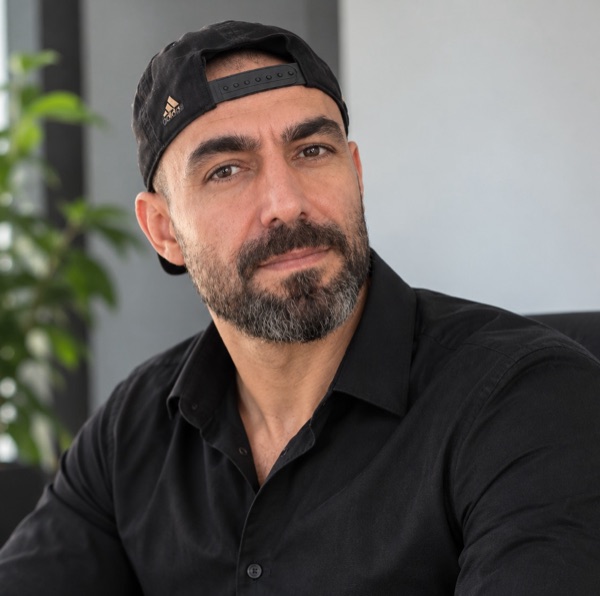
Adnan Dikmen and his team

Tegmaguard was founded in Berlin in 2026 by Adnan Dikmen and is developed together with his team. We have been working on the app for about a year, first on planning and research, then on programming.

  • AddressReuterstraße 46, 12047 Berlin, Germany. VAT ID DE363673191. Full details in the legal notice.
  • Contactinfo@tegmaguard.com. Technical questions are answered directly by the development team.
  • Signed macOS appThe macOS download is signed with an Apple certificate (Developer ID) in the name of Adnan Dikmen and notarised by Apple. macOS checks both the first time you open it. Notarisation is an automated malware check by Apple, not a privacy review. The Windows version is not signed yet.
  • Found a vulnerability?Please report it to info@tegmaguard.com. The machine-readable version is in our security.txt.
Portrait of Adnan Dikmen, founder of Tegmaguard